Habitat protégé Ch’ihilii Chìk

Les gardiens du savoir et les Aînés autochtones gèrent les zones humides depuis des millénaires. Leurs connaissances, qui jouent un rôle essentiel dans la protection et la gestion de ces zones, sont transmises au moyen de récits, de cérémonies et de mentorat direct, et permettent de veiller à ce que ces écosystèmes vitaux continuent de conférer des avantages écologiques, culturels et économiques.
Les connaissances traditionnelles que les gardiens du savoir et les Aînés autochtones peuvent mettre à profit montrent à quel point les cultures, la santé et le bien-être des communautés autochtones sont intrinsèquement liés aux zones humides.
Ces connaissances, y compris en ce qui concerne la protection, sont visées par l’entente sur l’autonomie gouvernementale de la Première Nation des Vuntut Gwitchin. Elles sont transmises grâce aux liens qu’entretiennent les jeunes et les Aînés avec le territoire et, de plus en plus, elles sont aussi transmises par l’intermédiaire du système scolaire local. C’est ainsi que les connaissances sont préservées pour les générations à venir.
Des zones humides saines sont essentielles aux modes de vie des Autochtones. Depuis des temps immémoriaux, les zones humides fournissent de la nourriture et des plantes médicinales, ainsi que des habitats sains pour la faune et la flore. Leur végétation protectrice et leur emplacement isolé en font un habitat important pour les animaux sauvages qui s’y nourrissent, s’y reposent et y élèvent leurs petits. Des zones humides saines sont aussi essentielles pour filtrer, nettoyer et retenir l’eau. Elles protègent ainsi les communautés des inondations et des sécheresses et contribuent à atténuer les effets des changements climatiques.
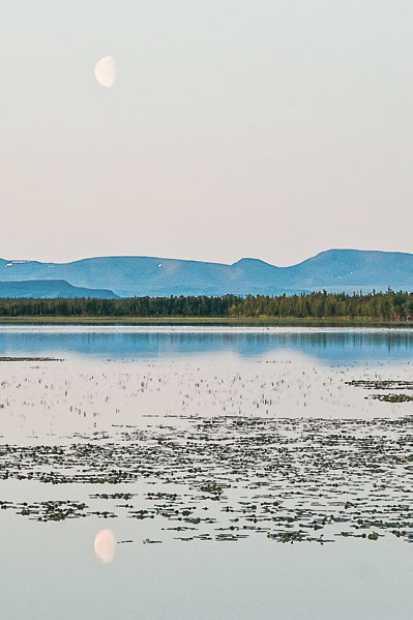
Dans le nord du Yukon, l’habitat protégé Ch'ihilii Chìk est un complexe de zones humides situé à environ 115 kilomètres au sud-est de la communauté d’Old Crow, dans le territoire traditionnel de la Première Nation des Vuntut Gwitchin. Le complexe s’étend sur 469 kilomètres carrés, englobe le lac Whitefish, et contient environ 1 000 lacs, étangs, ruisseaux, tourbières, marécages, tourbières basses et marais.
L’habitat protégé Ch'ihilii Chìk revêt une importance indéniable pour les peuples autochtones de la région et de l’ensemble du territoire. Bien qu’il ne s’agisse pas du plus grand complexe de zones humides au Yukon, son importance est attribuable aux liens culturels et historiques puisqu’il s’agit notamment du lieu de rassemblement des Gwich'in. L’habitat protégé Ch'ihilii Chìk constitue une partie importante du territoire ancestral des Dagoo Gwich'in, dont les terres traditionnelles se trouvent dans la région supérieure de la rivière Porcupine, au Yukon.
Les Van Tat Gwich'in et les Teetl'it Gwich'in utilisaient aussi cette région pour se réunir entre eux et avec les Dagoo afin de partager ce qu’ils avaient en abondance, de favoriser les relations entre les communautés et d’échanger des histoires.
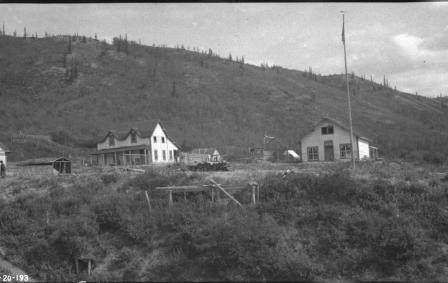
Une route clé entre Old Crow et Fort McPherson traverse la zone de l’habitat protégé Ch'ihilii Chìk, lequel se trouve aussi à proximité d’autres zones bien connues, comme Kàachik (village Johnson Creek) et le site historique Zheh Gwatsàl (maison LaPierre).
L’habitat protégé Ch'ihilii Chìk est situé à côté du projet de parc territorial de Dàadzàii Vàn (planification en cours - en anglais), avec pour frontière la rivière Eagle. La région est bien connue pour son abondante population d’animaux à fourrure : tsuk (martre), chihthee (vison), niinjii (lynx), tsèe (castor), dzan (rat musqué), trùh (loutre), nèhtrùh (carcajou), zhòh (loup) et neegoo (renard). Cette région est aussi riche en tùk dagàii (corégone) et elle constitue également un habitat essentiel pour le vadzaih (caribou de la Porcupine) et le dinjik (élan).
Les Aînés Van Tat Gwich’in ont déterminé que Ch'ihilii Chìk constitue une zone importante à protéger pour les générations futures. C’est dans le Plan régional d’utilisation des terres dans le Nord du Yukon (en anglais), approuvé et signé en 2009 par le gouvernement des Vuntut Gwitchin et le gouvernement du Yukon, que les Aînés ont recommandé pour la première fois que cette zone soit protégée. Le Plan régional d’utilisation des terres dans le nord du Yukon (en anglais) a été créé dans le cadre de l’Entente définitive de la première nation des Gwitchin Vuntut.
Après plusieurs années de travail, un plan de gestion pour l’habitat protégé Ch'ihilii Chìk a été signé en 2019. Le plan de gestion est ancré dans le savoir traditionnel autochtone qui décrit comment ces écosystèmes et écorégions doivent être utilisés et gérés.
Apprenez-en plus sur l’habitat protégé Ch'ihilii Chìk :
- Renseignements sur l’habitat protégé et sur la cogestion de celui-ci au moyen du Ch’ihilii Chìk Habitat Protection Area Management Plan (en anglais).
- Renseignements sur le lieu historique de Zheh Gwatsàl (maison LaPierre), qui se trouve à proximité de l’habitat protégé, et sur le projet de parc territorial Dàadzàii Vàn (en anglais).
- Plan régional d’utilisation des terres dans le Nord du Yukon (en anglais), créé dans le cadre de l’Entente définitive de la première nation des Gwitchin Vuntut.
- Renseignements sur l’identification et la classification des terres humides au Yukon grâce au guide de terrain visuel et en langage clair de Canards Illimités (en anglais).