Supplementing land-based foods with foods from farms, gardens and greenhouses

(traduction en cours - disponible en anglais seulement)
From an Indigenous perspective, food sovereignty and security was based in wild game and land-based foods. For millennia, First Nations Peoples harvested from the land to feed their communities. These practices continue today in many northern communities.
In recent times, Yukon First Nations have been experimenting with using modern agricultural practices and techniques to grow additional foods to feed their communities. The First Nations Development Corporations have been leading the way in exploring how agricultural and community-based projects such as farms, gardens and greenhouses, could help grow and increase access to quality foods.
Sha Shäw Corporation, a subsidiary of Champagne and Aishihik First Nations, is planning to open Mbät Kų, a community hub for local food, in 2026. Built in a modified sea can, Mbät Kų will be a place where the community can grow, process, store, cook, and purchase whole and quality food. There will be a butchery, cold storage, year-round hydroponic unit, and commercial kitchen. Mbät Kų means “food house” in Southern Tutchone.
Coordinator Lahela Reid has been part of building the community’s food system since 2024. She discovered her passion for growing food while working in the community greenhouse in the summer of 2024 and found that access to its produce led her and others to eat more vegetables.
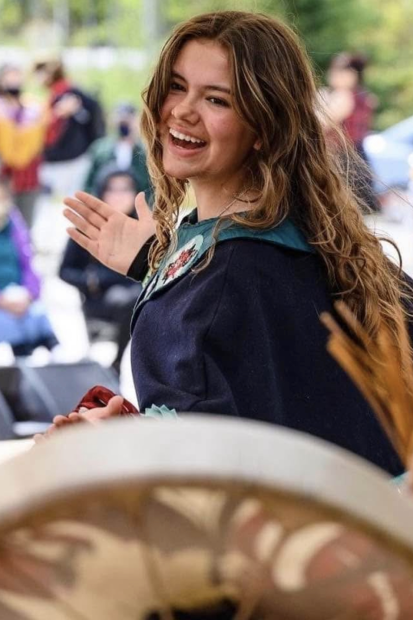
Mbät Kų̀ will play an important role in building and improving Champagne and Aishihik First Nations’ access to quality food. The prospect is exciting local youth and enticing them to get involved in the community’s food production.
“The movement for food security holds interest in the young people I'm friends with as well,” said Reid. “Not only is it important to them but they’d like to be a part of the movement as well. Whether that means coming down to the demonstration garden to weed the garden beds or help with the hydroponics system.”
Sha Shäw Corporation is seeking to establish a resilient local food system built by the community to meet their own needs. The community food hub will ensure sustainable access to healthy foods while also opening avenues for economic opportunities through entrepreneurship.
“The Mbät Kų will also have a rentable commercial kitchen and a rentable butchery kitchen,” said Reid. “We really hope this inspires small business development for start-ups in the commercial kitchen as well as easier access to commercial butchery space for the processing of wild meat and farm-raised meat in our community.”
The food hub will offer shared infrastructure giving local food-based businesses access to facilities for processing, producing and packaging food products. By removing common barriers, the food hub can become an incubator and accelerator allowing local entrepreneurs to use local ingredients and traditional methods in building their food-based businesses.
Mbät Kų is anticipated to open in the fall 2026, For Reid, this is the first step in a future of possibilities for the community.
“Our goal is to make Mbät Kų self-sustaining through the sales of vegetables, facility rentals, community workshops, experiential tourism products and collaborations with other local businesses,” said Reid. “Maybe eventually having farm-to-table dinners for dance fest or working together with the school to provide fresh meals for the kids and inspire more communities to go towards food security. Yè nʼą dän utädinle, what you have you give to the people.”
Mbät Kų is the latest in example of Yukon First Nations communities taking the lead on developing their own food and agricultural practices and systems.
In 2018, Carcross/Tagish First Nation established a farm near Carcross. What is grown on the farm varies from year to year. Most of the food is distributed to Carcross/Tagish First Nation Citizens and local residents for free.
Just south of Dawson City, the Trʼondëk Hwëchʼin Farm is a teaching and working farm focused on teaching sustainable farming practices to Trʼondëk Hwëchʼin Citizens.
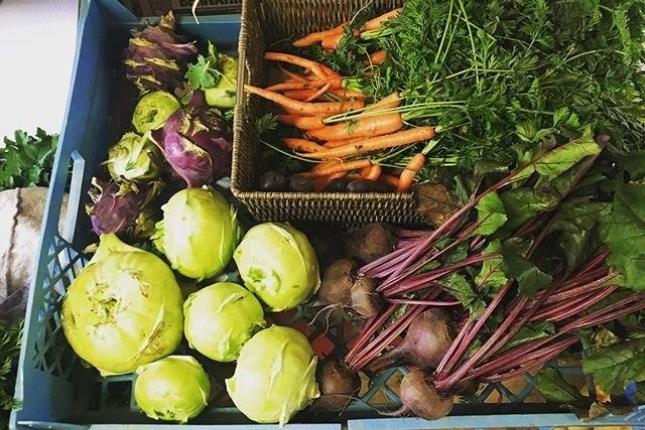
The farm was established on Trʼondëk Hwëchʼin Settlement Land in 2014. Working in partnership with Yukon University, the farm slowly developed and grew to have goats, rabbits, pigs, chickens and ducks along with rows of vegetables in the summertime and year-round greenhouses. Eggs, meat, and produce raised at the farm are available for purchase at local markets or directly through the farm.
Tr’ondëk Hwëch’in set out to establish a sustainable, local supply of organic food that provides fresh, healthy meals and benefits the land. The farm was intentionally built to grow local food while teaching essential skills such as seed production and planning, care and maintenance of seedlings, weeding and pest control and harvesting. This ensures the long-term success and sustainability of the farm.
Over 25 years ago, Carmacks resident Dawn Charlie was wondering what would happen in a large-scale emergency to the Yukon’s food supply. This is when the idea of creating a local food initiative for her community started to germinate.
A community garden and small greenhouse was started in 2000-20001. Over the years, the garden expanded to grow corn, melons and pumpkins to carrots, beans and kale, peas, cabbage, cauliflower, broccoli and other cold-hardy vegetables grow outside. This allowed residents of Carmacks to enjoy locally grown organic produce and contributed to the community’s health and wellness.
Little Salmon/Carmacks First Nation eventually adopted the greenhouse and farm operations and over the decades, the project grew into a farming venture with a potato field across the river, a community root cellar and larger greenhouse operations. The greenhouse and farm operations provided training opportunities, education in gardening and composting and donated fresh produce to Elders, single parents and diabetics in the community. Year after year, the LSCFN Farm and Garden program continues to expand and modernize, pursuing the goal of feeding LSCFN Citizens.
In 2010, Alice Boland was honoured as the Farmer of the Year in 2010 for her years of work, knowledge sharing at the Little Salmon/Carmacks greenhouse. She continues to head the Farm and Garden program in Carmacks, ensuring that citizens have access to fresh, high-quality nutrition at low to no cost.