Housing solutions that are more than a roof – they're a home, a community and a place for growth

(traduction en cours - disponible en anglais seulement)
In 2014, Ta'an Kwäch'än Council faced a pressing need for their Citizens and the community at large.
“At that point in time, we had no housing for Citizens,” said Vice President of External Relations and Corporate Secretary Tiffany Eckert-Maret. “We had a few leftover housing from old Indian Affairs time and that we got as a cooperative agreement from Kwanlin Dün when we separated from them. So, we had less than 10 houses for a nation of 463 people.”
The then Ta'an Kwäch'än Council Chief Kristina Kane met with the Da Daghay Development Corporation Chief Executive Officer Ben Asquith to talk about the housing gap.
It was decided that the development corporation would take action. The DDDC would develop a housing model for the community that would provide housing solutions for Ta'an Kwäch'än Council Citizens as well as serve the greater need for affordable housing. This approach would create financial sustainability for the First Nation while meeting an urgent community need.
This is how the River Bend Affordable Housing project was born.
As part of the project, the DDDC hosted a job fair and welcomed Ta'an Kwäch'än Council Citizens to participate in the project. Those who expressed interest were given a job regardless of their skillset. Hired employees were given on-the-job training and skills development. Some went onto secure permanent management positions.
The affordable housing project was intentionally managed and coordinated to align with DDDC’s social vision to uplift the First Nation’s Citizens and help them thrive.
By 2017, the first building was completed and 14 families moved into their new homes, with 12 being Ta'an Kwäch'än families.
The project has since grown to five buildings that provide comfortable homes to nearly 110 Ta'an Kwäch'än Council Citizens and Yukoners.
For DDDC, the project is more than housing – it is a community.
For Eckert-Maret, whose daughter lived at River Bend, it was imperative that property management be run by those with a vested interest in building that community. She wanted to ensure her daughter and others would find not just a roof but a home where they could grow and thrive.
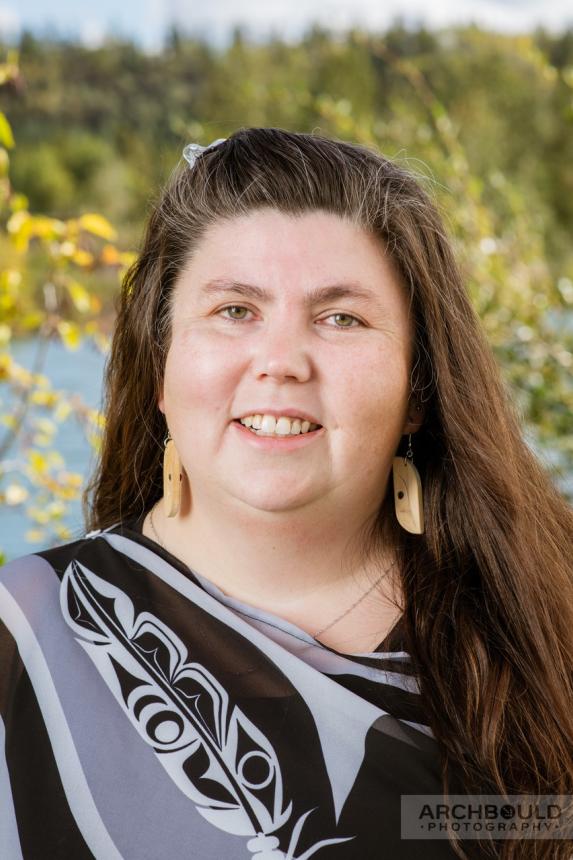
“We used to subcontract out the property management for the units. So, we kind of took it on in-house. It was a brand-new thing for us,” said Eckert-Maret. “And I used to always think about how to make that building because our People were living in there, I want to make it something that would be safe enough for my daughter, that she would love, that our People would feel comfortable in and also, just because it's affordable housing doesn't mean you deserve any less of anything else.”
For Eckert-Maret, the core value of River Bend is to create beautiful, affordable homes with vibrant resident communities. For her, this is a way to honour those who choose to live there and to show gratitude to them for making the project possible and feasible.
“We put a tremendous focus on humanity and housing. We put the People first. They're more than just our tenants or our clients. If it wasn't for them choosing to live with us, we would have nothing.”
For River Bend, these efforts include activities and events that foster relationships not only within the buildings but also within the Whistle Bend neighbourhood.
“We put a tremendous value on that,” said Eckert-Maret. “We have Easter egg hunts at Easter time. We have this really cool thing we started up called Fun in the Sun. We bring in a giant slide. We have a big barbecue. We invite the whole community of Whistle Bend. We do that every year as a way to try and make people proud to live in that unit, in those apartments, and make it a community.”
Studies echo the importance of this approach showing that tenant satisfaction, safety and community connection positively impact the financial performance and cost-effectiveness of apartment complexes. A sense of belonging and community in a place where one lives reduces operating costs related to disturbances and conflicts in buildings and costs related to turnover, vacancy, vandalism and maintenance.
“The consistent message heard from People who've been doing this longer than us is, if you build a community, people are going to want to stay there,” said Eckert-Maret. “They're not going to want to leave. And if people stay there and they don't want to leave, they're going to take care of their apartments. Well, if they do a great job taking care of their apartments, then we have less repairs and maintenance to do, which means we are spending less money on turnovers and such. So, we see the value of taking care of our clients, because if we take care of our clients, they're going to take care of our units, and if they're taking care of our units, they're going to take care of our corporations.”
The success of the River Bend model has fueled the development corporation to start a new housing project. Winter Crossing is a 105-unit housing project designed to help meet the growing demand for affordable housing in Whitehorse.
The project will be the single largest affordable housing development in the Yukon’s history and will be owned and operated by Da Daghay Development Corporation.
The new housing project is named after T’äw Tà’är (Winter Crossing) - a place of great significance for Ta’an Kwäch’än People. Located at the intersection of many traditional travel routes, the place represented the interconnected web of seasonal food, family, travel and trade for the First Nation. The project’s name pays homage to the past and shares the story with future generations.
“It also will teach people about what Winter Crossing is,” said Eckert-Maret. “It had great significance for our Nation.”
The first phase of construction for Winter Crossing is scheduled to begin later in spring 2026 is anticipated to be completed in fall 2026.